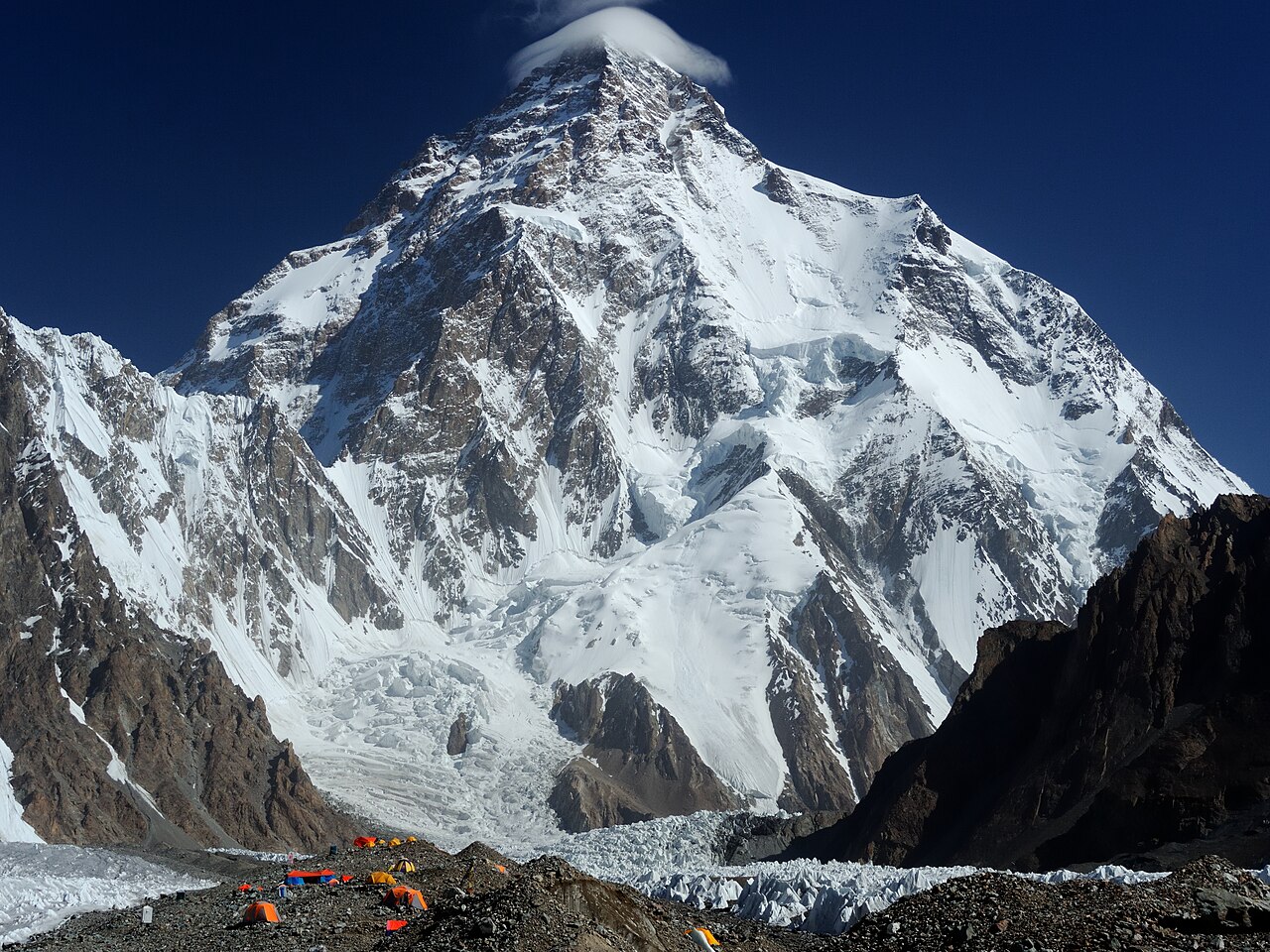
Most people who do the K2 Base Camp Trek come back the same way they went in. That is fine. The Baltoro Glacier is worth walking twice. But there is another option, and it is better. The Gondogoro La Trek takes you from Askole through the Baltoro to K2 Base Camp and Concordia, then crosses the Gondogoro La pass at 5,585 metres into the Hushe Valley on the other side. You enter through one valley and exit through another. You do not retrace a single step of the approach.
It is a genuine crossing of the Karakoram. Twenty-one days from Skardu, one way from Askole to Hushe, pass at 5,585 metres, crampons required on the descent, four 8,000-metre peaks visible from a single camp. If the K2 Base Camp Trek is the long way into the mountains, the Gondogoro La is the long way through them.
This guide covers the full route, the pass crossing logistics, difficulty, season, permits, and everything else you need to plan it properly.
Table of Contents
- The Crossing in Brief
- Day by Day: Askole to Hushe
- The Gondogoro La: What the Pass Is Actually Like
- The Hushe Valley Descent
- When to Go
- Difficulty vs the Standard K2 Trek
- Permits
- Logistics: Two Valleys, Two Jeep Transfers
- Gear Specific to This Trek
- Frequently Asked Questions
The Crossing in Brief
The standard Gondogoro La Trek runs 18 to 21 days from Skardu. Approach from Askole follows the same route as the K2 Base Camp Trek: Jhola, Paiju, Urdukas, Goro II, Concordia, K2 Base Camp. Then instead of turning back, you head southeast from Concordia up the Gondogoro Glacier to the Gondogoro La at 5,585 metres. The descent on the other side drops into the Hushe Valley. A jeep from Hushe to Khaplu and then Skardu closes the loop.
Total distance one way from Askole to Hushe is approximately 170 kilometres. The highest point is the pass itself at 5,585 metres. The pass crossing requires crampons and ice axe on the descent and is the only genuinely technical section of the entire route. Everything else is glacier moraine walking. The pass is the reason this trek gets a higher difficulty rating than the standard K2 Base Camp Trek.
One practical point worth noting upfront: the Gondogoro La is typically only crossable from mid-July to early September. Earlier in the season the snow conditions on the pass make it dangerous for a general trekking group. Later in September, early snowfall can close it. The window is real. Build your departure date around it.
Day by Day: Askole to Hushe
Days 1 through 12 of the Gondogoro La Trek are identical to the K2 Base Camp Trek. Skardu, Askole, the Baltoro approach to Concordia and K2 Base Camp. Rather than repeat all of it here, the itinerary below covers the full trip but focuses on the sections specific to this route: the Gondogoro approach, the pass crossing, and the Hushe Valley descent.
Days 1-2: Islamabad and Skardu
Day 1: arrive Islamabad, visa, rest. Day 2: fly to Skardu (50 minutes, spectacular). Sort permits on arrival. Buy supplies at Skardu bazaar: nuts, dried apricots, biscuits, energy bars. The dried apricots from Baltistan are worth buying in quantity. Buy more than you think you need.
Day 3: Skardu Preparation
Full day for permit processing, meeting the guide and porter team, packing gear bags, and briefing on the route. Do not skip this day. Everything that goes wrong on the glacier has its roots in preparation that was rushed in Skardu.
Day 4: Skardu to Askole (3,015 m)
Six to eight hours by jeep along the Braldu River. The road beyond Dasso is rough. Askole at the end of it. Last village, last phone signal, start of the glacier world. Camp at the edge of the village.
Day 5: Askole to Jhola (3,100 m, 24 km)
First walking day and the longest in distance. Flat track along the Braldu River. Rope bridge crossing early. Sandy, dusty terrain, hot in the middle of the day. Start before sunrise and rest at midday.
Day 6: Jhola to Paiju (3,400 m, 13 km)
Shorter day. Paiju is the last green camp before the glacier: willow trees, a stream, apricot bushes in season. The Trango Towers are visible from camp. Take a photograph. The rock is orange-pink at the right time of day and nothing in the Alps looks like it.
Day 7: Rest Day at Paiju
Acclimatize, sort gear, eat well. Some trekkers walk up the hillside above camp for views. That is optional. The mandatory part is not moving too fast before the glacier.
Day 8: Paiju to Khoburtse (3,700 m, 13 km)
First day on the Baltoro Glacier. Moraine walking starts here. What looks like 13 kilometres on a map takes as long as 20 kilometres on normal trail. You step, check footing, step again. Trekking poles mandatory. Cold at night even in July.
Day 9: Khoburtse to Urdukas (4,050 m, 12 km)
Urdukas sits on a grassy shelf above the glacier with views south to the Cathedral Spires and north to the upper Baltoro. Last grass you will see for a long time. Fill water bottles. Drink well.
Day 10: Urdukas to Goro II (4,285 m, 14 km)
Long glacier day. Altitude noticeable at pace. Headache is common at Goro II. Drink water, rest on arrival, do not push through symptoms. There is nowhere to go if you overdo it here.
Day 11: Goro II to Concordia (4,690 m, 12 km)
K2 appears mid-morning, identifiable by its black pyramid. You round a bend and Concordia opens: Broad Peak east, K2 north, Gasherbrum IV left. Most people go quiet when they see it. That is the correct response.
Day 12: Rest Day at Concordia
Full rest day. Two nights at Concordia gives two morning windows for clear sky. The light at 6 a.m. in clear weather is something specific: Broad Peak catches first light while K2 is still dark. Plan this day into the schedule. Do not cut it to save time.
Day 13: K2 Base Camp Day Trip (5,150 m)
Twenty kilometres round trip on the Godwin-Austen Glacier. K2 fills more of the sky with each kilometre. Base camp is the staging area for K2 expeditions. The south face rises 3,600 metres directly above you. Walk to it and back. Sleep at Concordia.
Day 14: Concordia to Gondogoro Base Camp (5,000 m)
Turn southeast instead of back down the Baltoro. This is the day the route diverges. Camp at the base of the Gondogoro Glacier at 5,000 metres. The pass is visible above camp. The slope looks steep. It is steep. Sleep early. You move before dawn tomorrow.
Day 15: Gondogoro La Pass Crossing (5,585 m)
Start at 3 to 4 a.m. when snow is frozen hard. Cross the pass while conditions hold. Fixed ropes on the descent. Crampons and ice axe required. Descend to the Hushe Glacier. Camp in the upper Hushe Valley. The view from the top looks back at K2 and forward into Baltistan. You are crossing the Karakoram.
Day 16: Upper Hushe Valley Descent (4,200 m)
Descend the Hushe Glacier moraine. The terrain is similar to the Baltoro but the scale is smaller. Camp at around 4,200 metres in the upper valley.
Day 17: Lower Hushe Valley to Hushe Village (3,100 m)
The agricultural terraces appear below you as you lose altitude. Potato fields at 3,400 metres. Apricot orchards at 3,200 metres. Hushe village at 3,100 metres, with stone houses and the specific silence of a place that does not have roads to most of the world. This is the end of the trekking route.
Day 18: Rest Day in Hushe
Rest, eat local food, meet the village. Hushe produces many of the high-altitude porters who work on the 8,000-metre peaks. The people here have a direct connection to the mountains you just walked through.
Day 19: Hushe to Khaplu
Jeep from Hushe to Khaplu: 2 hours on a rough road. Khaplu is the main town of the Ghanche district with proper accommodation and food. First night in a proper bed since Skardu.
Days 20-21: Khaplu to Skardu, Fly Home
Drive Khaplu to Skardu via the Shyok River valley (2 to 3 hours). The canyon walls on this section are enormous even after everything you have seen. Day 21: fly Skardu to Islamabad and onward. Build in a buffer for the flight delay that will very likely happen.
The Gondogoro La: What the Pass Is Actually Like
The Gondogoro La sits at 5,585 metres on the ridge separating the Gondogoro Glacier (Baltoro side) from the Hushe Glacier (Hushe Valley side). The approach from Gondogoro Base Camp is a steady snow slope that steepens in the final 200 metres to the col. On hard frozen snow at 3 a.m. with crampons, this section is strenuous but not technically demanding. In afternoon soft snow, the same slope becomes a serious avalanche risk. The timing is everything.
The view from the top of the pass is one of the best in the Karakoram. Looking back toward the Baltoro, K2 and Broad Peak are visible to the north. Looking ahead down the Hushe Valley, the terrain drops away toward green valley and eventually the Shyok River system far below. You are standing on the watershed between two of the most significant glacial systems in the range.
The descent from the pass is where the technical gear matters. Fixed ropes on the upper section allow controlled descent even in crampon-soft snow. Below the ropes, the slope eases and you transition to moraine walking. The total vertical descent from the pass to the Hushe Glacier is roughly 400 metres of technical terrain. Below that it is another 600 metres of more gradual descent to the valley floor.
One thing that surprises most trekkers: the descent side of the Gondogoro La is significantly steeper than the ascent side. What looked challenging coming up looks genuinely imposing looking down. This is normal and expected. The fixed ropes handle it. Stay clipped in, face the slope, and descend slowly.
The Hushe Valley Descent
After two weeks on the Baltoro, the Hushe Valley feels like a different planet. The Baltoro is enormous and exposed. The Hushe Valley is intimate and enclosed. The glacier retreats quickly as you descend and within a few hours you are walking through scrub vegetation and then through actual grass.
The people in Hushe are Balti. The valley has been inhabited for centuries, with seasonal pastoralism and terraced agriculture at the higher elevations. The community has a strong connection to the mountaineering world because Hushe produces many of the high-altitude porters who work on the 8,000-metre peaks. When you arrive in Hushe Village you are likely to be talking to people whose family members have been to the summit of K2.
The food in Hushe is simple and specific: chapati, dal, potatoes, tea. If you have been eating camp food for two weeks this will taste exceptional. It is also the first food that was not carried in from a supply depot 150 kilometres away.
When to Go
Mid-July to early September. That is the Gondogoro La window. The pass itself is the constraint. In early July the snow conditions on the upper pass section can be dangerous for non-mountaineers. In late September, early-season snowfall re-covers the pass and the fixed ropes are removed by the teams who place them.
Peak season is late July to mid-August. You will share the route with other groups. The pass crossing in peak season can involve queuing for the fixed ropes. Busy but manageable.
Late August into early September is often the best window for the pass crossing. Snow conditions are more stable, weather is clearer on average, and groups are fewer. The risk is that porter availability at the end of season in Hushe can be limited for return logistics. Plan this in advance.
Difficulty vs the Standard K2 Trek
The Gondogoro La Trek is harder than the standard K2 Base Camp Trek. Not by a little. It is harder by the pass crossing, by the additional five days of total trek length, and by the higher maximum elevation.
The specific additional demands beyond the standard K2 trek:
- Crampons and ice axe use on the Gondogoro La descent (technical gear you do not need on the standard route)
- Pre-dawn start and cold conditions on the pass crossing day
- Elevation at 5,585 metres (430 metres higher than K2 Base Camp)
- Five additional days of physical effort after K2 Base Camp
- Two valley approaches requiring coordination of two jeep transfers
The fitness requirement is higher. You should be capable of 20-kilometre days on rough terrain for 8 or more consecutive days. The acclimatization profile is similar to the standard trek, but the additional altitude at the pass demands better preparation.
If you have not trekked to K2 Base Camp or equivalent altitude before, we do not recommend attempting the Gondogoro La as your first Karakoram trek. The standard K2 Base Camp Trek first, then the Gondogoro La on a subsequent trip, is a better sequence.
Permits
Same requirements as the K2 Base Camp Trek, plus a specific permit for the Gondogoro La pass crossing. All are arranged through a licensed Pakistan trekking agency.
Trekking permit from the Alpine Club of Pakistan: approximately USD 50 per person. Central Karakoram National Park entry fee: approximately USD 25. Gondogoro La crossing permit: additional USD 20 to USD 30 per person, confirming you have the required technical experience and equipment. Travel insurance covering helicopter evacuation is required and verified.
A licensed guide is mandatory. The Gondogoro La pass crossing specifically requires a guide who has crossed the pass before and knows the current rope placement and snow conditions. When choosing an agency, confirm that your guide has made the crossing in the current season or the previous one.
Logistics: Two Valleys, Two Jeep Transfers
The one-way nature of this trek creates a logistical requirement that the standard K2 trek does not have: you start in the Braldu Valley (Askole) and end in the Hushe Valley. Your return vehicle needs to be in Hushe when you arrive. This requires coordination between your agency in Skardu, your guide team, and a driver in Khaplu (the nearest town to Hushe with reliable transport).
A reputable agency handles this without you needing to manage it directly. Before departure, confirm explicitly with your agency that the return transport from Hushe is arranged and that someone will be waiting in the village. Do not leave this to chance. Hushe is remote. There is no bus service. You need a prearranged vehicle.
Porter logistics are also two-stage. Your approach porters from Askole are released at Concordia or at Gondogoro Base Camp (depending on your agency's arrangement). New porters for the descent are either brought up from Hushe before the crossing or your agency arranges a combined group that covers both sides. Clarify this in advance. The porter arrangements on the Hushe side are the most common point of confusion for first-time Gondogoro La trekkers.
Gear Specific to This Trek
Everything on the K2 Base Camp Trek gear list applies here. Beyond that, the Gondogoro La requires specific technical equipment.
Crampons: 12-point steel crampons, properly fitted to your boots. Lightweight trail crampons or microspikes are not adequate for the Gondogoro La descent. Your boots must be crampon-compatible. Check before you go. Incompatible combinations have caused accidents on this pass.
Ice axe: Standard alpine ice axe for self-arrest. You are not doing technical mountaineering, but you are on a steep snow slope at 5,500 metres and a self-arrest capability is the difference between stopping a slip and a much longer slide. Most trekkers who make this crossing have never used an ice axe before. Practice the basics before the trip. It takes about 20 minutes to learn and matters a great deal if you need it.
Harness: A basic sit harness for clipping into the fixed ropes on the descent. Simple, light, and you need it.
Headlamp with fresh batteries: You are starting at 3 to 4 a.m. on pass crossing day. Headlamp is not optional. Bring spare batteries in a warm pocket because cold kills battery performance at 5,000 metres.
Frequently Asked Questions
How much harder is the Gondogoro La than K2 Base Camp Trek?
Meaningfully harder. The pass crossing is a genuine technical section that the standard K2 trek does not have. Five additional days of trekking after K2 Base Camp when you are already physically depleted adds to the challenge. Most trekkers who have done both say the Gondogoro La is about 30 to 40 percent more demanding overall. That is a significant margin.
Do I need mountaineering experience?
No prior mountaineering experience is strictly required, but comfort with crampons and ice axe is important. If you have never worn crampons, practice before the trip. If you have never used an ice axe, learn the self-arrest technique before going. Your guide will help on the day, but knowing what to do in advance makes the crossing safer and faster for everyone.
What happens if weather closes the pass while we are at Gondogoro Base Camp?
You wait. Or you turn back. Attempting the Gondogoro La in deteriorating weather or with fresh snow on the pass is not a calculated risk, it is a bad idea. A guide with current local knowledge will make the call. Built-in flexibility in your itinerary (one or two extra days at Gondogoro Base Camp) reduces the pressure to push in marginal conditions. If the pass stays closed for more than two or three days, the fallback is returning on the Baltoro route.
Is the view from the Gondogoro La better than from Concordia?
Different rather than better. Concordia gives you the panorama of four 8,000-metre peaks from a flat, comfortable camp at a reasonable pace. The Gondogoro La gives you that same view from a steep snow slope at 5,585 metres while wearing crampons and moving to stay warm. The pass view is more dramatic physically, but you are unlikely to linger. Concordia is where you actually see the mountains. The pass is where you cross over them.
What is the best base to use for this trek?
Skardu. All logistics originate from Skardu: permits, guide and porter hiring, supplies, vehicle to Askole. Return from Hushe is via Khaplu to Skardu. Most trekkers fly Islamabad-Skardu and Skardu-Islamabad, with the full one-way traverse in between. Allow at least two full days in Skardu at the start for permit processing and team preparation.
Can I do this as a solo trekker?
Yes, in the sense that you can trek as a group of one with a guide. Pakistani regulations require a licensed guide for all foreign trekkers on this route. A solo trekker will have a private guide, a cook, and a porter team. The cost per person is higher than for a group because fixed costs divide fewer ways, but the logistics are exactly the same. Many people do the Gondogoro La solo and report it as one of the best experiences of their trekking lives.