
Biafo Hispar Snow Lake Trek
Biafo-Hispar Glacier, Karakoram, Pakistan
0/5
0% of guests recommend
Duration
18 Days
Tour Type
Trekking
Group Size
16 persons
Overview
About the Trek
The Biafo-Hispar traverse is widely considered one of the greatest long-distance glacier treks on Earth. Connecting Askole in the Baltoro corridor to Hispar village in the Nagar Valley via the Snow Lake plateau at 5,128 metres, this eighteen-day point-to-point journey crosses two of the world's largest mountain glaciers outside the polar regions. The Biafo Glacier stretches 67 kilometres from Askole to the Snow Lake plateau, and the Hispar Glacier runs a further 49 kilometres from Snow Lake to the Nagar Valley. Together they form a single 116-kilometre glacial highway through the uninhabited core of the central Karakoram - an ice world of extraordinary beauty, silence, and scale that has captured the imagination of explorers since Martin Conway first traversed the route in 1892.
Route Overview
The traverse is a one-way journey starting in Askole and ending in Hispar. From Askole, the trail follows the Biafo Glacier northeast for six to seven days through progressively more remote terrain, passing the Uzun Brakk base camp area and the spectacular granite spires of the Latok group before opening onto the vast Snow Lake plateau. Snow Lake is not a lake but a high cirque of permanent snow and ice surrounded by unnamed peaks above 6,000 metres, filling the sky in every direction with a pure white landscape unlike anything else in the Karakoram. From Snow Lake, the crossing of the Hispar La (5,151m) descends onto the Hispar Glacier for a further five days of glacier travel to Hispar village and the Nagar Valley road.
Snow Lake: The Roof of the Karakoram
Snow Lake sits at the centre of the traverse at 5,128 metres and represents the emotional and physical climax of the journey. The plateau is surrounded by the Latok peaks, Baintha Brakk (the Ogre), Sosbun Brakk, and dozens of unnamed summits above 6,000 metres. The sheer scale of the cirque, and the complete absence of any human infrastructure or sound, creates an experience of wilderness purity that very few places on Earth still offer. Camping at Snow Lake on a clear night, with the snow glowing blue in the moonlight and peaks rising 1,000 metres above the plateau rim, is one of the defining high-altitude experiences in world mountain travel.
Best Season
The Biafo-Hispar traverse is only feasible from late June through early September. The Snow Lake plateau and Hispar La crossing require stable snow conditions that are only reliable in this window. July is the most popular month with the longest daylight hours. August sees the most expedition traffic and the most established trail markings on the upper glacier. The traverse should not be attempted in June without local guide confirmation of conditions, as crevasse bridges on the Biafo can be dangerously weak in early season.
Difficulty and Requirements
This is a demanding trek graded as strenuous. Trekkers must have prior multi-day high-altitude experience and the physical capacity for six to eight hours of glacier travel daily over sustained periods. The Hispar La crossing at 5,151 metres requires crampons and ice axe, which are provided as group equipment. Navigation on the upper Biafo and Hispar glaciers requires guide experience as crevasse fields can make route-finding dangerous without knowledge of the terrain. This is not a route for beginners, and World of Mountain requires prior trekking experience above 4,000 metres from all participants.
Why the Biafo-Hispar
The Baltoro Glacier and K2 Base Camp route is rightly famous, but the Biafo-Hispar traverse offers something the Baltoro cannot: true solitude. The number of trekkers completing this route each year is a small fraction of the Baltoro traffic, and for long sections of the upper Biafo and Hispar glaciers you may not see another party for days. For experienced trekkers seeking the ultimate Karakoram wilderness experience without the expedition permits, high altitude camps, or technical climbing of an 8,000-metre objective, the Biafo-Hispar Snow Lake traverse is the definitive answer.
Customized/Private Groups PricingDiscount will be automatically applied during the booking process if the number of guests meets the criteria specified in table below.(currently discounts are applicable to private tours only)
| Solo Price | 2 to 4 Person | 5 to 8 Person | 9 to 20 Person |
|---|---|---|---|
| $5,200 | $4,100 | $2,950 | $2,400 |
Itinerary
Day 1: Arrival in Islamabad
Altitude: 507m | Briefing and welcome dinner
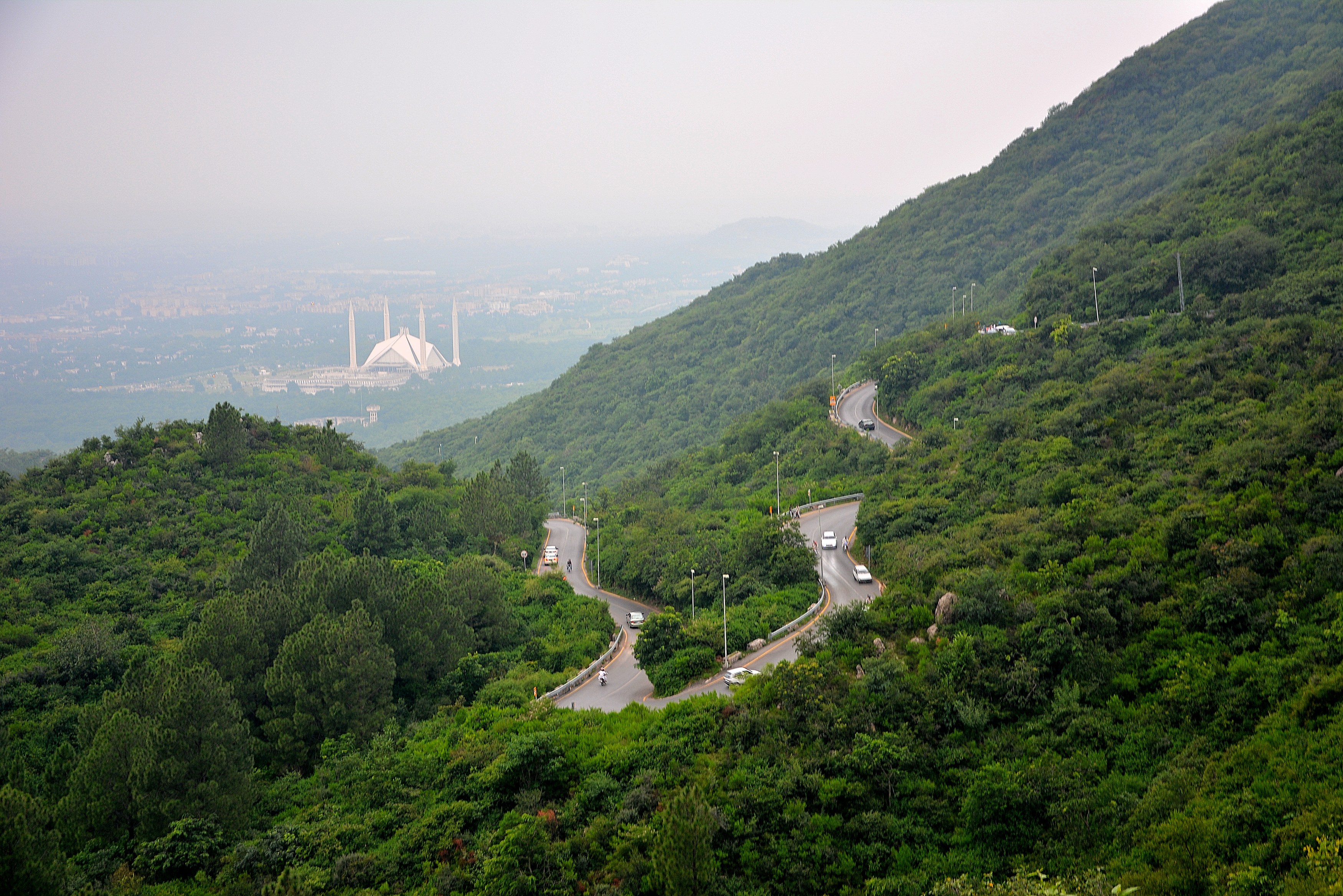
Arrive in Islamabad and transfer to the hotel. Evening briefing covers the complete traverse: the Biafo approach, Snow Lake, Hispar La crossing, and the Hispar descent. Equipment audit and porter kit distribution plan reviewed. Welcome dinner with your lead guide.
Day 2: Fly to Skardu
Altitude: 2,228m | Flight and rest
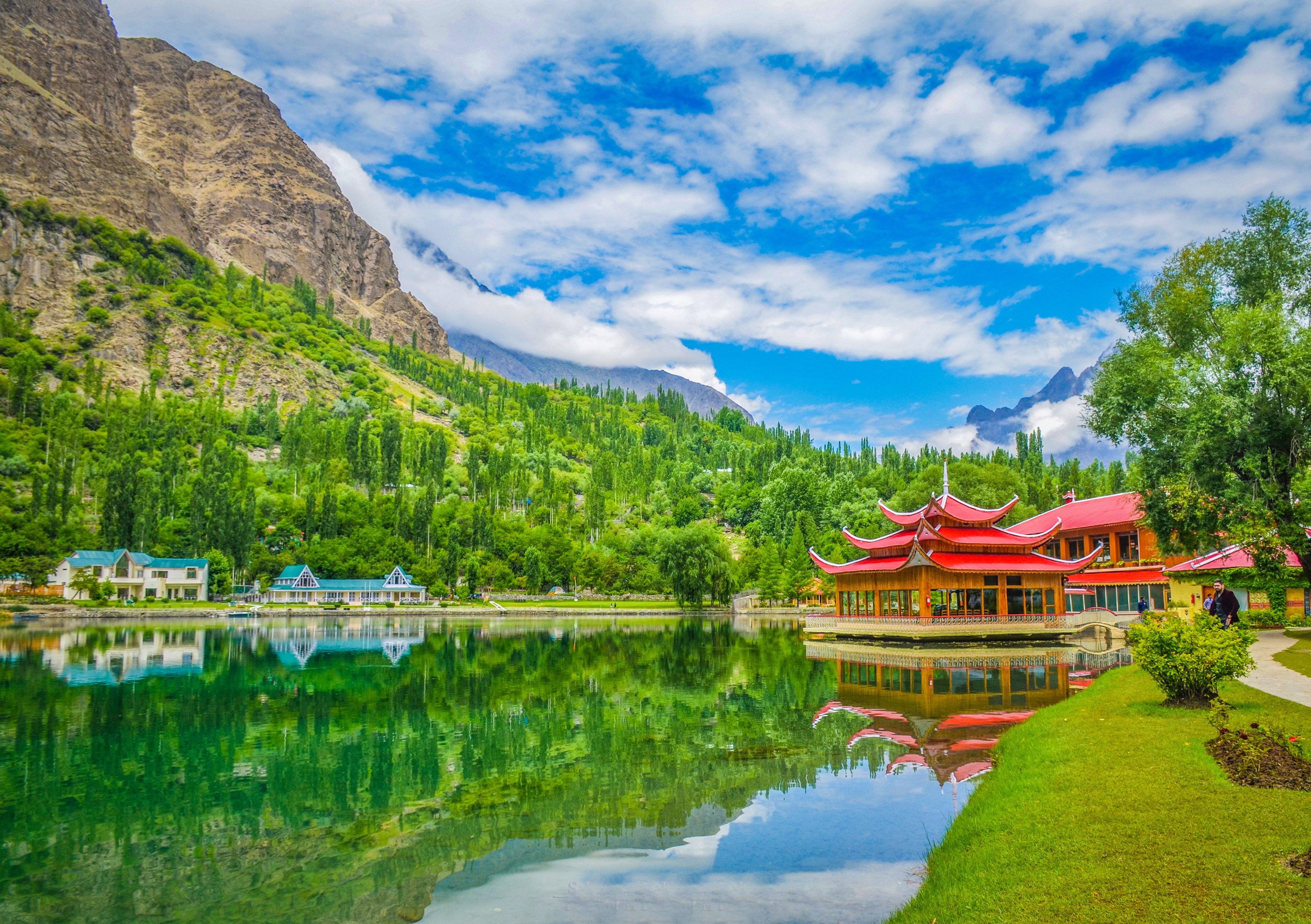
Early morning flight to Skardu with views of the Karakoram. Afternoon acclimatization walk and final equipment check. The camp cook reviews the food inventory for eighteen days on the glacier. Rest and early bed.
Day 3: Drive Skardu to Askole
Altitude: 3,015m | Jeep drive 5-6 hours
Jeep drive along the Braldu Gorge to Askole, the last village before the Biafo Glacier. Permit formalities with the ranger station. Camp in Askole and meet the full porter team. The Biafo Glacier entrance is visible at the head of the valley from camp.
Day 4: Askole to Namla Camp (Biafo Day 1)
Altitude: 3,400m | Trek 5-6 hours on Biafo Glacier
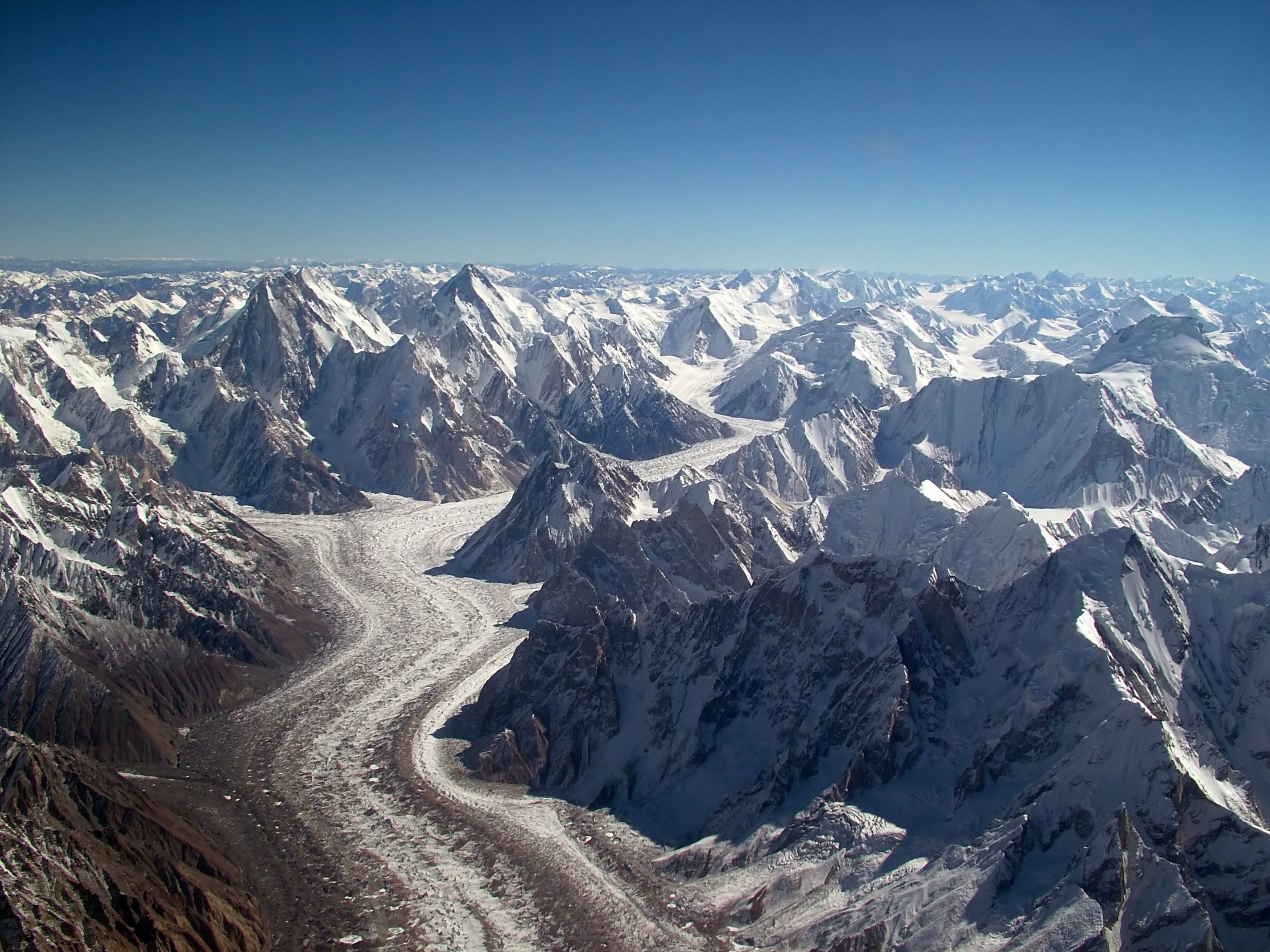
Step onto the Biafo Glacier for the first day of the traverse proper. The Biafo's lower section is a broad highway of grey ice with lateral moraines on either side. Namla camp on the northern moraine marks the first night on the glacier. The isolation begins here - no roads, no villages, nothing but ice and sky ahead for twelve days.
Day 5: Namla to Marpogoro Camp (Biafo Day 2)
Altitude: 3,700m | Trek 6-7 hours
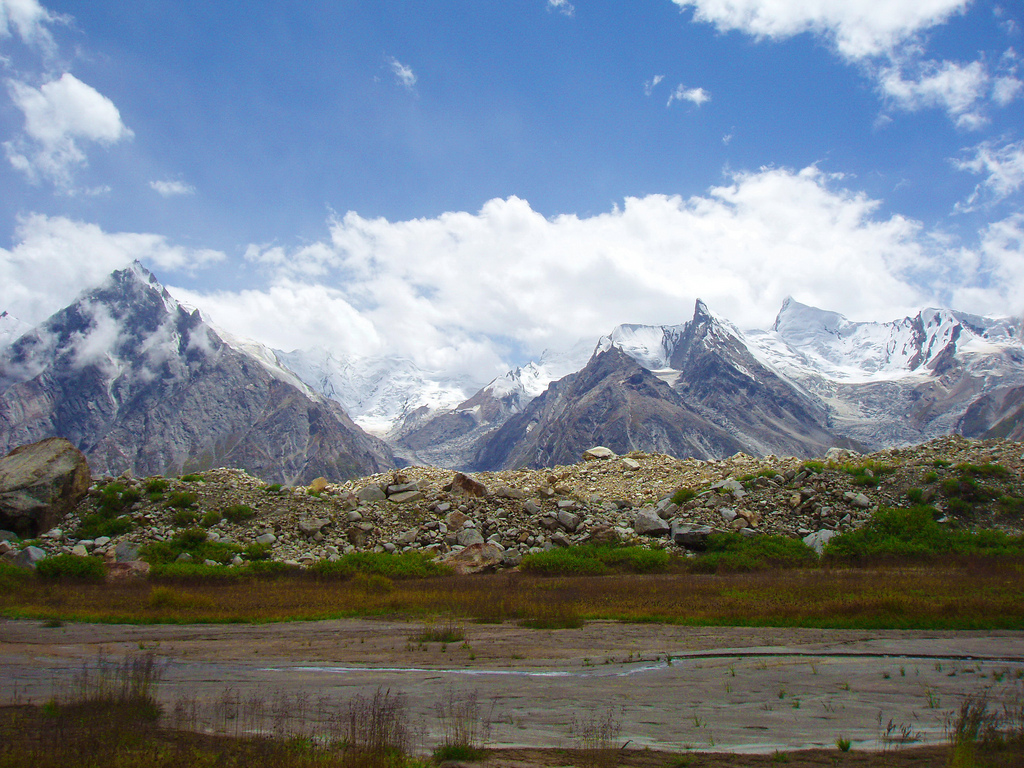
Continue up the Biafo, the glacier ice becoming progressively cleaner and more complex as altitude is gained. Marpogoro camp is a flat moraine area on the southern side of the glacier with good views back down the valley toward Askole. The Latok peaks begin to appear in the distance to the north.
Day 6: Marpogoro to Baintha Camp (Biafo Day 3)
Altitude: 3,900m | Trek 6 hours
Baintha camp sits beneath the extraordinary Latok group - Latok I (7,145m), Latok II (7,108m), and Latok III (6,949m) - whose granite north faces rise sheer above the glacier. These peaks are among the most technically demanding in the Karakoram and their unclimbed routes have defeated some of the world's best alpinists. The camp atmosphere is one of awe at the scale of the surrounding peaks.
Day 7: Baintha to Uzun Brakk Area (Biafo Day 4)
Altitude: 4,100m | Trek 6-7 hours
The Biafo glacier narrows and its surface becomes more complex above Baintha as the ice is compressed between converging valley walls. The Ogre (Baintha Brakk, 7,285m) appears ahead, its serrated summit ridge one of the most technically demanding peaks in the world. Camp on the upper Biafo moraine with growing views toward the Snow Lake plateau still two days ahead.
Day 8: Rest and Acclimatization Day
Altitude: 4,100m | Rest on upper Biafo
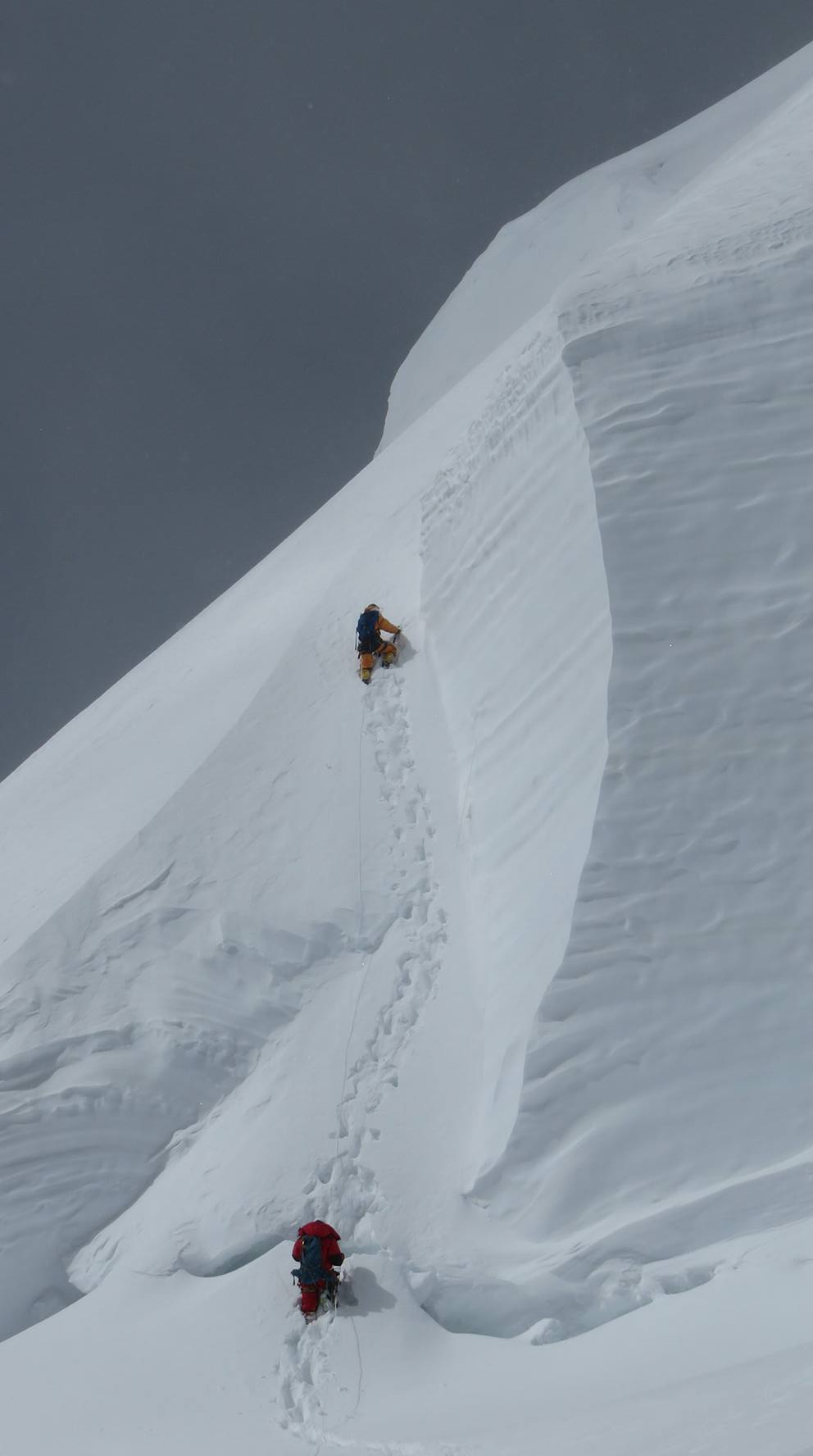
A mandatory rest day on the upper Biafo before the final push to Snow Lake and the altitude gains ahead. Spend the morning on a short acclimatization walk onto the glacier to test crampon technique. The guide assesses team fitness and SpO2 levels. Photography, journaling, and rest fill the afternoon at one of the most remote camps on the traverse.
Day 9: Upper Biafo to Snow Lake Approach
Altitude: 4,600m | Trek 6 hours
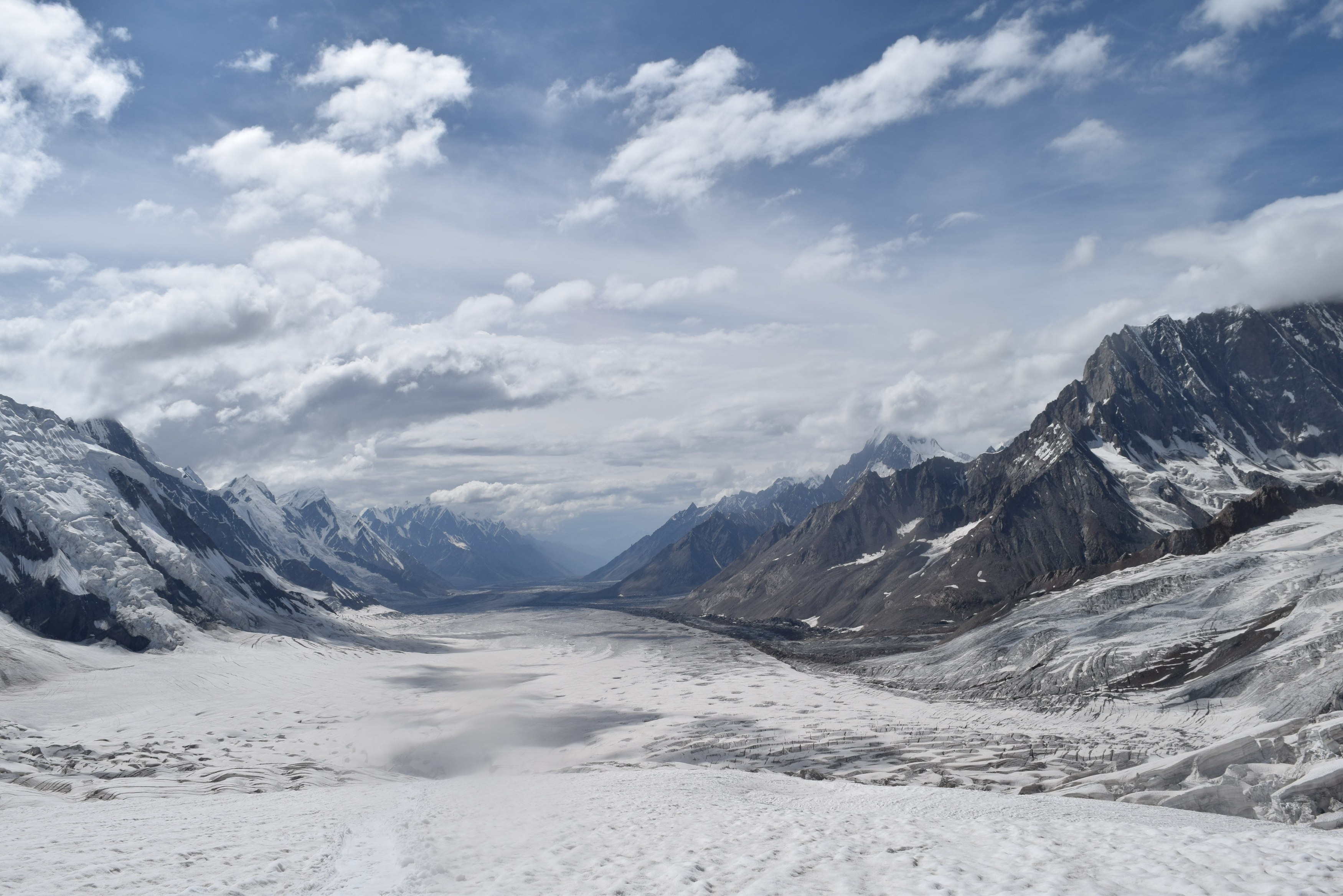
The glacier flattens and widens dramatically as the Snow Lake plateau comes into view ahead, the horizon expanding in every direction as the confining valley walls recede. Navigation on this section requires the guide's knowledge of the crevasse systems hidden beneath the apparently flat surface. Camp at the edge of the Snow Lake plateau as the sky turns extraordinary colours at sunset over the surrounding peaks.
Day 10: Snow Lake Camp and Exploration
Altitude: 5,128m | Rest and exploration at Snow Lake
A full day on the Snow Lake plateau at 5,128 metres. The sheer scale of the cirque - completely surrounded by peaks above 6,000 metres and filled with unbroken white from horizon to horizon - is something that photographs cannot fully communicate. Walk the perimeter of the plateau with your guide, identifying peaks and glacier flows. This is the highest point of the traverse and one of the great wilderness experiences available anywhere in the trekking world.
Day 11: Snow Lake to Hispar La Foot
Altitude: 4,900m | Trek 4-5 hours across Snow Lake
Cross the Snow Lake plateau toward the Hispar La, the high pass that marks the watershed between the Biafo and Hispar glacier systems. The approach to the pass is across a broad snow field that requires steady navigation. Camp at the base of the final Hispar La headwall with the pass visible above in the afternoon light.
Day 12: Cross the Hispar La (5,151m)
Altitude: 5,151m then descent | Trek 7-8 hours
The Hispar La crossing begins early. Crampons on, the team ascends the snow slope to the col at 5,151 metres with full views back across Snow Lake and ahead down the Hispar Glacier to the Nagar Valley far below. The descent on the Hispar side is steep on loose moraine before stabilising on the glacier surface. This is the technical highlight of the traverse. Camp on the upper Hispar with the sense of having crossed from one world into another.
Day 13: Upper Hispar Glacier
Altitude: 4,400m | Trek 6-7 hours
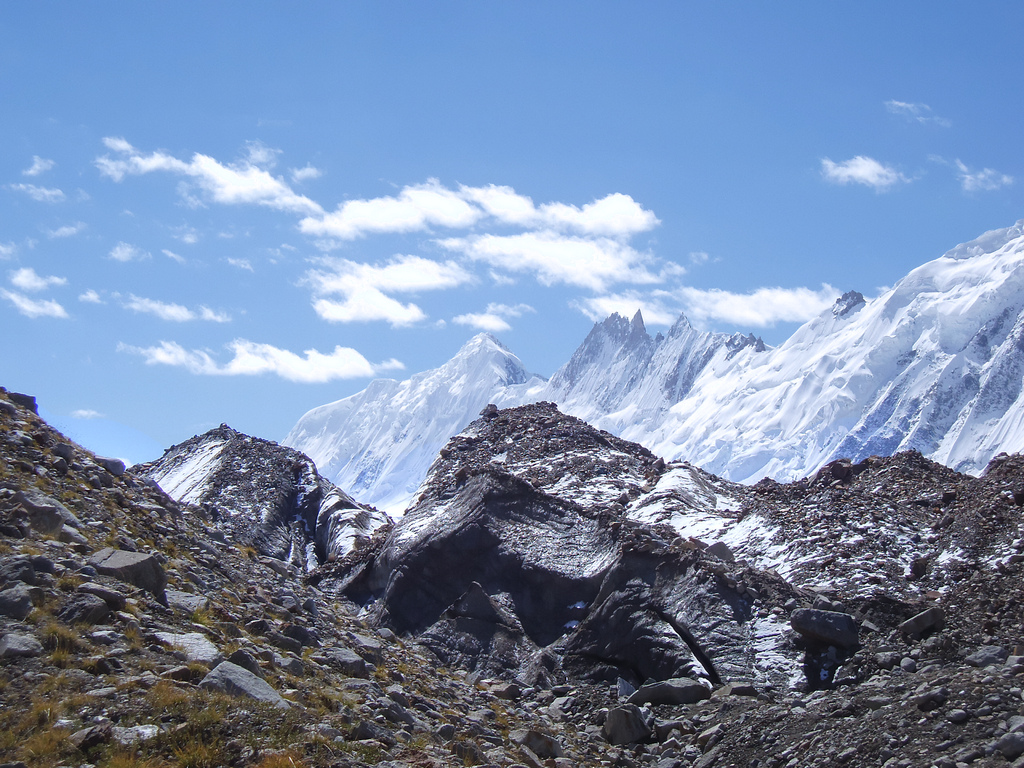
Begin the long descent of the Hispar Glacier, now moving with the slope for the first time on the traverse. The Hispar's ice architecture differs markedly from the Biafo - more chaotic seracs and larger meltwater channels that require careful route-finding. The valley begins to widen ahead as the Nagar Valley approaches. Camp on the lower Hispar moraine.
Day 14: Hispar Glacier to Bitanmal
Altitude: 3,800m | Trek 6 hours
Continue down the Hispar through Bitanmal camp, one of the few flat camping areas on the lower glacier. The ice becomes dirtier with moraine debris as the glacier snout approaches. The first signs of vegetation - scrub grass and willow bushes - appear on the lateral moraines, a welcome return of green after days on pure ice and snow.
Day 15: Off the Hispar Glacier to Hispar Village
Altitude: 3,100m | Trek 5-6 hours
The final trekking day on the glacier ends when the Hispar snout gives way to a rough trail descending through moraine and scrub to Hispar village at 3,100 metres. The first apricot trees and stone houses of Hispar appear after fifteen days of ice, rock, and snow. A deeply emotional return to human habitation after one of the great mountain wilderness traverses.
Day 16: Hispar to Nagar Valley by Jeep
Altitude: 2,000m | Jeep drive 3-4 hours to Nagar
Jeep drive from Hispar down the Nagar Valley to Nagar town and on to a guesthouse near Karimabad with hot showers and clean beds. The drive passes through the same apricot terraces and Nagar villages that appear on approach to Rakaposhi Base Camp. Porter farewell ceremony in Hispar village before departure.
Day 17: Rest in Nagar or Gilgit
Altitude: 1,500m | Rest and debrief
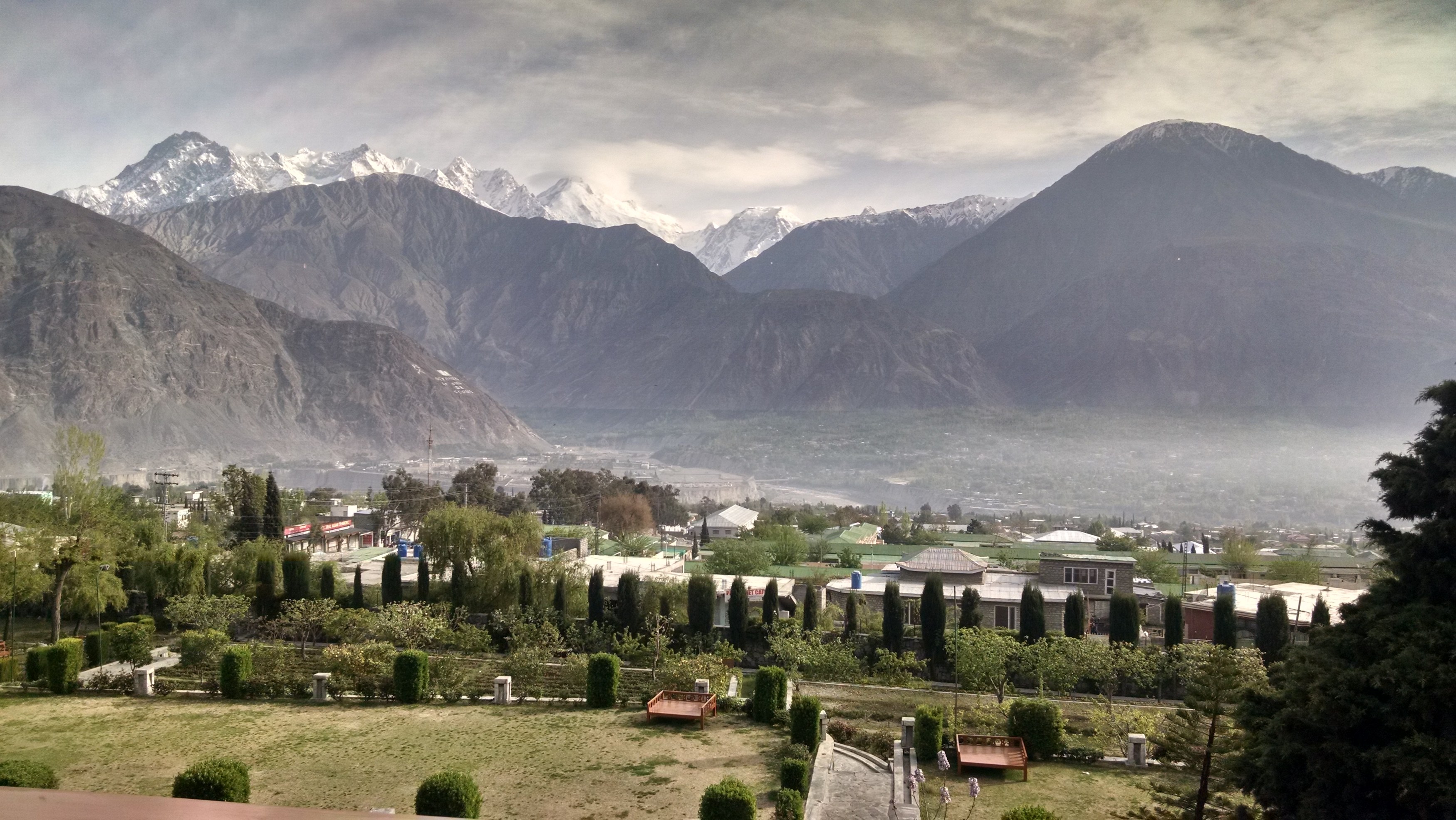
Full rest day in Nagar or Gilgit for physical recovery and celebration. The lead guide conducts a formal traverse debrief, reviewing the route, conditions, and individual achievements. Evening celebratory dinner with traverse completion certificates presented to all team members.
Day 18: Fly Gilgit to Islamabad and Departure
Altitude: 507m | Flight and onward travel
Morning flight from Gilgit to Islamabad. The Biafo-Hispar Snow Lake Traverse is complete - 116 kilometres of glacier, Snow Lake at 5,128 metres, the Hispar La crossing at 5,151 metres, and eighteen days in one of the world's last true wildernesses. Airport transfer and assistance with international departures provided.
Highlights
- Cross Snow Lake (5,128m), a vast high-altitude plateau of permanent snow surrounded by unnamed peaks above 6,000 metres at the heart of the central Karakoram.
- Trek 116 kilometres across two of the world's longest glaciers outside the polar regions in a single point-to-point traverse from Askole to Hispar.
- Camp in complete wilderness solitude on the upper Biafo and Hispar glaciers, where you may go days without seeing another trekking party in either direction.
- Cross the Hispar La at 5,151 metres on crampons, gaining a bird's-eye view across the Snow Lake plateau and down the Hispar Glacier to the Nagar Valley.
- View the Latok group (Latok I, II, III) and Baintha Brakk (the Ogre) from directly below, peaks that represent some of the most difficult unclimbed and rarely climbed routes in the world.
- Follow the exact route of Martin Conway's 1892 first traverse, one of the foundational journeys of Karakoram exploration, across a landscape virtually unchanged since his expedition.
- Experience the Snow Lake plateau under a full moon, with the snow glowing in every direction and peaks rising above the rim of the cirque in absolute silence.
- Complete a genuinely end-to-end traverse connecting two distinct Karakoram valleys - the Baltoro corridor and the Nagar Valley - with nothing but glacier and sky between them.
- Encounter the Biafo Glacier's ice architecture: seracs, meltwater channels, and pressure ridges that create a constantly changing ice landscape unlike anything on the Baltoro.
- Emerge from eighteen days in the wilderness into Hispar village and the green terraced fields of the Nagar Valley, a contrast that makes the return to civilisation feel genuinely dramatic.
Included/Excluded
Return flights Islamabad to Skardu (start) and Gilgit to Islamabad (finish)
All jeep transport: Skardu to Askole and Hispar to Gilgit
All accommodation: hotels in Islamabad, Skardu, and Gilgit; full camping throughout the traverse
All meals from Day 1 dinner through Day 18 breakfast
Certified high-altitude guide with Biafo-Hispar traverse experience
Assistant guide and full porter team for equipment carry
Crampons and ice axes for the Hispar La crossing (group equipment)
All trekking permits and Askole ranger fees
Camp kitchen, cooking fuel, and group tents
First aid kit, emergency oxygen, and satellite phone
International flights to and from Pakistan
Pakistan visa and travel insurance
Personal trekking gear: sleeping bag, boots, trekking poles, clothing
Personal crampons if preferred over group equipment
Personal snacks and energy supplements
Tips for guide and porters
Any medical or evacuation costs
Things To know
Physical Preparation
The Biafo-Hispar Snow Lake Traverse is the most physically demanding trek in the World of Mountain portfolio. Eighteen consecutive days of glacier travel with multiple days above 4,500 metres requires a level of fitness and endurance that cannot be improvised on the mountain.
Begin a structured training programme at least ten to twelve weeks before departure. Long-distance hiking with a loaded pack (10-12kg) is the most specific preparation - aim for weekly long days of eight hours or more on varied terrain. Stair climbing, cycling, and running build the cardiovascular base needed for sustained glacier days. Core and back strength training directly reduces fatigue from pack carrying over the length of the traverse. Trekkers who have completed the K2 Base Camp Trek or Gondogoro La Trek are well-prepared for this route.
Altitude and Acclimatization
The traverse reaches 5,151 metres at the Hispar La and spends three days above 4,600 metres around the Snow Lake plateau. The gradual six-day Biafo approach from 3,015 metres to 5,128 metres provides effective natural acclimatization that is built into the itinerary.
- A rest and acclimatization day on the upper Biafo at Day 8 is mandatory and must not be shortened regardless of group fitness or weather pressure.
- Daily SpO2 monitoring from Day 4 onward helps identify any team member acclimatizing more slowly than expected, allowing pace adjustments before the critical Snow Lake section.
- Diamox (acetazolamide) is recommended for trekkers with prior AMS history or those new to altitudes above 4,500 metres. Consult your doctor at least four weeks before departure.
- Hydration at altitude is critical - three to four litres of fluid daily from Baintha camp onward. The dry glacier environment dehydrates faster than most trekkers expect.
Equipment and Glacier Travel
Eighteen days on two major glaciers demands equipment that is durable, weatherproof, and appropriate for the specific conditions of the Biafo and Hispar glacier systems.
- Four-season mountaineering or heavy trekking boots rated for crampon use are required. The Hispar La crossing and upper glacier sections involve hard snow and ice where boot quality directly determines safety.
- A sleeping bag rated to minus 15 degrees Celsius is recommended for Snow Lake and upper glacier camps, where night temperatures can drop below minus 10 degrees in August.
- Gaiters are essential throughout the traverse to keep ice debris and meltwater out of boots on wet glacier sections.
- Glacier sunglasses with 100 percent UV protection and side coverage are mandatory. Snow blindness risk on the Snow Lake plateau is extreme due to the complete 360-degree snow reflection at high altitude.
- Trekking poles with snow baskets provide essential balance and load relief on uneven moraine and glacier ice throughout the traverse.
Food, Water, and Resupply
There is no resupply opportunity between Askole and Hispar village. All food for eighteen days must be carried from Askole by the porter team. This logistical reality makes the Biafo-Hispar traverse one of the most complex food planning exercises in Karakoram trekking.
The World of Mountain camp cook prepares three cooked meals daily using a combination of fresh produce (consumed in the first four days), dried and preserved foods for the glacier section, and high-calorie speciality foods for the Snow Lake and Hispar La days. Freshwater is available throughout the traverse from glacier meltwater streams. Water from the glacier surface is filtered and treated by the cook team before use. Personal energy snacks, chocolate, nuts, and sports nutrition should be carried in your daypack for daily consumption between meals.
Wilderness and Responsible Travel
The Biafo-Hispar glacier corridor is one of the last genuinely pristine wilderness trekking routes in the Karakoram. The very low number of trekkers who complete this route each year is its greatest ecological asset. Every trekker who passes through has a responsibility to keep it that way.
- All non-biodegradable waste must be carried out to Askole or Hispar village without exception. The remoteness of the route means there is no waste collection infrastructure anywhere on the traverse.
- Camp on established moraine platforms wherever possible to avoid disturbing fragile pioneer vegetation on the glacier margins.
- Human waste management follows Leave No Trace glacier protocols using designated waste bags at all camps above the treeline.
- All porters are treated according to Pakistan's Porter Welfare Law standards. Porter welfare is a non-negotiable commitment on all World of Mountain expeditions.
Emergency and Communication Plan
The Biafo-Hispar traverse passes through one of the most remote landscapes accessible by a trekking party in the entire Karakoram range. A clear and comprehensive emergency plan is part of every World of Mountain traverse briefing.
The lead guide carries a satellite phone with pre-programmed contacts for emergency services in Skardu and Gilgit, the World of Mountain office, and the Pakistan Army Aviation Corps helicopter rescue coordination number. Emergency landing zones are identified at Baintha camp on the Biafo and at Bitanmal on the Hispar - the only points on the traverse where helicopter access is potentially feasible. A full first aid kit, emergency oxygen, and a written medical protocol for altitude emergencies are carried throughout. All trekkers must nominate an emergency contact at home before departure.
FAQs
How difficult is the Biafo-Hispar traverse compared to the K2 Base Camp Trek?
The Biafo-Hispar is comparable in physical demand to the K2 Base Camp Trek but with more days of sustained glacier travel and a technical pass crossing at 5,151 metres. Prior multi-day trekking experience above 4,000 metres is required.
Is the traverse done in both directions or one way?
The traverse is a one-way journey from Askole to Hispar. This is its defining characteristic as a geographic achievement - you cross the full Karakoram between two separate valleys with no return on the same route.
What is Snow Lake?
Snow Lake is a high-altitude glacier cirque at 5,128 metres at the junction of the Biafo and Hispar glacier systems. It is not actually a lake but an enormous plateau of permanent snow surrounded by peaks above 6,000 metres. It is one of the most extraordinary landscapes in the world.
Do I need crampons for this trek?
Yes. Crampons and ice axes are required for the Hispar La crossing at 5,151 metres and potentially for sections of the upper Biafo and Hispar glaciers. These are provided as group equipment.
How many trekkers complete this route each year?
The Biafo-Hispar traverse is completed by a small number of trekking groups each season - far fewer than the Baltoro. This makes it one of the most genuinely remote and uncrowded major trekking routes in the Karakoram.
What is the maximum altitude?
The Hispar La crossing at 5,151 metres is the technical high point. Snow Lake sits at 5,128 metres. Both require acclimatization built into the itinerary through the gradual Biafo approach.
Is there any mobile signal on the traverse?
There is no mobile signal anywhere between Askole and Hispar village. The satellite phone carried by the guide is the only means of external communication in case of emergency.
How many porters are required for this trek?
A team of twelve to sixteen porters is typical for a group of four to six trekkers, due to the volume of food required for eighteen days without resupply and the distance of the glacier carry. All porter logistics are managed by World of Mountain.
What happens if someone needs to evacuate during the traverse?
The glacier route does not allow helicopter landing in most sections. In the event of a medical emergency, the evacuation plan involves guided descent to the nearest accessible point. The satellite phone enables contact with emergency services in Skardu and Gilgit.
Can the traverse be done in reverse (Hispar to Askole)?
Yes, though the standard direction is Askole to Hispar. The reverse direction makes the Hispar La approach more gradual but the Biafo descent longer. Most guides recommend the standard direction.
What permits are required?
A trekking permit for the Biafo corridor, Askole ranger registration, and Hispar Valley entry documentation are required and arranged by World of Mountain. No climbing permits are needed.
Is the Biafo-Hispar suitable for solo travellers?
Solo travellers are welcome and join a small group on this route. The minimum group size is two persons for safety on the glacier and pass crossing sections.
Tour Location
Biafo-Hispar Glacier, Karakoram, Pakistan
Reviews
0/5
Not Rated
Based on
0 review
Excellent
0
Very Good
0
Average
0
Poor
0
Terrible
0
No Review
14%
from
$2,800
$2,400
from
$2,800
$2,400

